Some migrations are not about changing what a website is. They are about giving it a cleaner place to keep being itself.
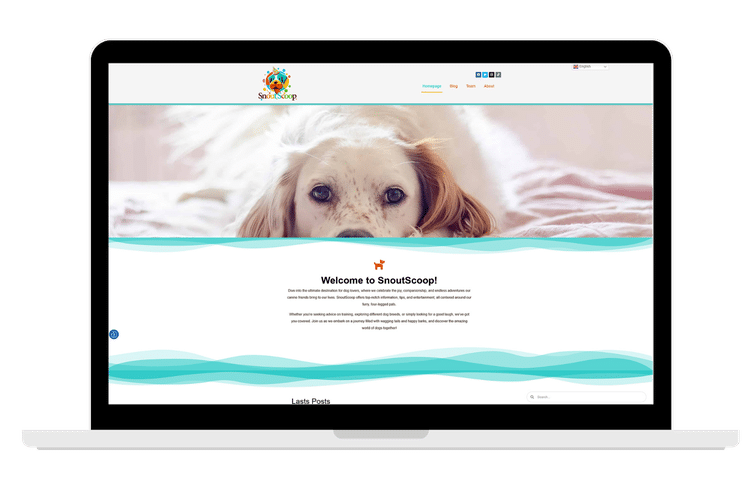
That was the goal with SnoutScoop, a dog-focused blog built around canine adventures, adoption, products, training, and playful editorial content. The old site already had the important part: a real archive of posts, categories, tags, images, and ideas.
What it also had was a lot of WordPress history around it.
The previous version was running on Hello Elementor with Elementor, Elementor Pro, translation plugins, SEO plugins, cache tools, media tools, WooCommerce, social feed plugins, and other pieces that had accumulated over time. Some of that made sense for the old build. None of it needed to become the foundation of the new one.
A content migration first
The first decision was important: this was not going to be an Elementor migration.
SnoutScoop is mainly a blog, and the blog posts were already stored as standard WordPress posts with usable Gutenberg-style content. That meant the cleanest path was to migrate the content itself, not recreate the old page-builder stack inside the new site.
The old site became the source of truth for posts, dates, slugs, statuses, categories, tags, featured images, inline media, menus, site settings, and useful SEO metadata. The new site could then stay Lubinik-native, using the Lubinik parent theme, the core plugin, and a dedicated SnoutScoop child theme.
What moved
The export captured the important pieces of the old site before anything was imported into the new one.
- 46 WordPress posts
- 615 attachment records
- 55 categories
- 322 tags
- 6 pages exported for later review
- 2 menus and 6 menu items
- SEO metadata preserved separately where useful
- Elementor metadata preserved as reference, not as a frontend dependency
The import then focused on the blog-critical layer: media, taxonomy terms, post content, featured images, and URL remapping.
That distinction matters. A migration becomes much safer when old plugin data is exported for audit, but not blindly installed, copied, or treated as the new runtime.
The media problem
As usual, the real migration challenge was not the post titles. It was the media.
The old uploads folder contained normal WordPress media, generated thumbnails, plugin folders, Elementor files, WooCommerce leftovers, backup-related folders, and cleanup traces. Copying everything would have moved a lot of noise into the new site.
So the migration imported WordPress attachment records deliberately, built an old-to-new media map, remapped featured images, and replaced old local URLs inside post content. Later, a separate media audit reviewed renamed images, WebP versions, missing references, and gallery-heavy posts.
One article in particular, the Midjourney canine fashion post, had hundreds of image references and gallery-like groups. That kind of content is exactly why media migration needs its own process instead of being treated as an afterthought.
Keeping the blog, losing the weight
The point of this rebuild was not to make SnoutScoop less like SnoutScoop.
The voice, the topics, the post archive, and the dog-centered editorial identity are still the heart of the site. What changed is the structure underneath. The new version no longer needs Elementor as the main design system for the blog. It does not need the old collection of plugins to explain itself. It can use native WordPress content, Lubinik’s shared foundation, and a child theme built specifically for SnoutScoop’s visual direction.
That is one of the things I like most about this kind of migration: the visible site can keep its personality while the technical base becomes calmer.
The migration also created a new tool
There was another reason SnoutScoop needed more than a cleaner theme.
The site had stayed still for too long because keeping it updated took too much time. Writing new posts, choosing topics, checking sources, preparing images, setting categories and tags, and formatting everything properly was not difficult in theory, but it was heavy enough in practice that the blog stopped moving.
That problem became the starting point for a new Lubinik support plugin: Lubinik AI Publisher.
The goal was not to make an automatic content machine. I did not want a plugin that silently publishes articles and fills a site with unchecked AI text. I wanted an editorial assistant that could reduce the friction around publishing while keeping the final decision in human hands.
For SnoutScoop, that means the plugin can help suggest article ideas based on the existing archive, use site-specific editorial context from the child theme, collect sources, generate a WordPress draft, assign categories and tags, and optionally create featured or inline images that are converted to WebP before being imported into the media library.
- Topic suggestions use the existing WordPress posts so new ideas do not repeat what is already in the archive.
- Article jobs are stored privately, with the original idea, selected sources, provider settings, generated title, excerpt, content, and linked draft post.
- Drafts remain drafts until they are reviewed and edited.
- The SnoutScoop child theme defines the site voice, including a playful but reliable dog-focused editorial tone.
- Images follow a WebP media policy, so generated visuals are prepared for the site instead of being dropped in raw.
This is exactly the kind of tool Lubinik tends to create: not a feature invented in isolation, but a response to a real workflow that had become too slow to keep using.
A SnoutScoop child theme
The new site now has its own Lubinik child theme: lubinik-child-snoutscoop.
That child theme is where the SnoutScoop-specific layer belongs: archive layouts, single post presentation, blog styles, gallery behavior, design-pack configuration, SEO defaults, structured-data settings, and the site-level details that should not live in the parent theme.
This keeps Lubinik’s architecture consistent. The parent theme and core plugin stay reusable. The child theme carries the visual memory and editorial needs of SnoutScoop. The old Elementor design remains useful as reference, but it no longer controls the new site.
What this proves
SnoutScoop is a useful migration test for Lubinik because it is not a custom BnB site, a shelter platform, or a special domain addon project. It is a blog.
That makes the architecture question different. No new content model was needed. No custom addon had to be invented just to feel clever. Native WordPress posts, categories, tags, media, menus, pages, SEO, and a project-specific child theme were enough.
And that is a good result. A framework should not make every site more complicated. It should know when the boring WordPress model is already the right model.
Looking ahead
The migration gives SnoutScoop a cleaner future path.
The blog content is now in a Lubinik-based site, the media has been audited and remapped, the old plugin stack is no longer the foundation, and the child theme can continue to evolve around the actual editorial experience. On top of that, Lubinik AI Publisher gives the site a practical way to keep producing new drafts without making every article feel like a full manual rebuild.
There is still room for refinement: page rebuilds, SEO Light mapping, final menu polish, visual adjustments, and continued media cleanup where needed.
But the important part is done: SnoutScoop has moved from an older WordPress stack into a cleaner Lubinik structure without losing the archive that made the site worth migrating in the first place.