 Diamed International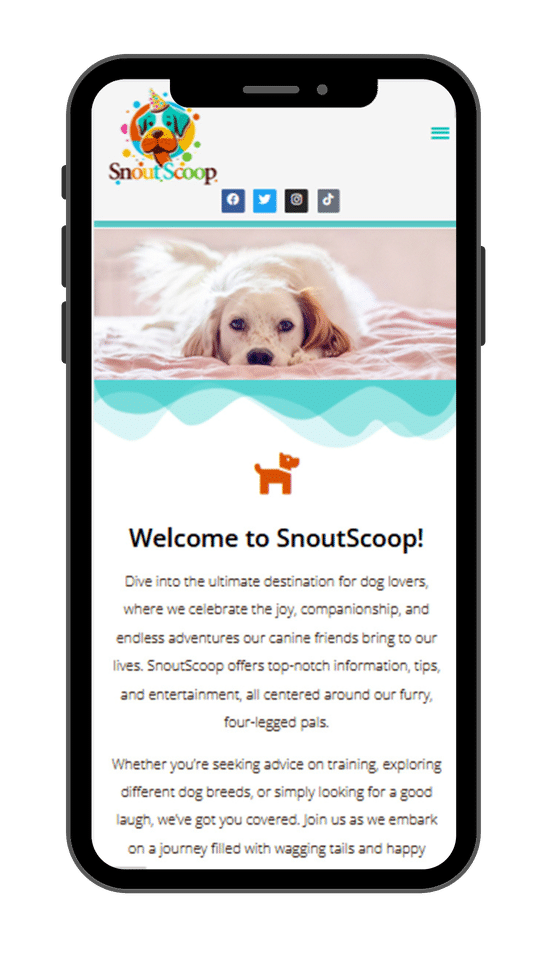
Case Study - Snoutscoop
I wanted to rethink how I create content on WordPress in the age of AI.
The original site, built with Elementor, no longer matched my current workflow or technical standards.
I needed a more structured, lightweight, and fully controlled approach.
Role
WordPress development, design, content creation, AI integration, automation with n8n.
The Solution
I redesigned SnoutScoop as an evolving project:
- full rebuild of the site using my own custom WordPress theme
- creation of a dedicated plugin to manage articles, visuals, and animal profiles
- integration of an n8n workflow to automate content generation and publishing while keeping full control of the process
The project also serves as a testing ground for AI-assisted content creation (text, titles, images), with a focus on quality and consistency rather than quantity.
The Results
SnoutScoop has become my creative and technical laboratory. It’s a living site where I combine design, code, AI, and automation while exploring new ways of creating for the web. Beyond the personal side, it now serves as a showcase for testing and refining my methods before applying them to professional projects.
2026 Update - Migrated to Lubinik
SnoutScoop has now been migrated to Lubinik, my custom WordPress framework.
This update does not replace the original history of the project. SnoutScoop already had a real identity as a dog-focused blog, with articles about canine adventures, adoption, products, training, and playful editorial content. The goal of the migration was not to change that personality, but to give the site a cleaner and more maintainable foundation.
The previous version was built around Hello Elementor, Elementor, Elementor Pro, SEO tools, translation plugins, cache tools, media utilities, WooCommerce, social feed plugins, and other WordPress pieces that had accumulated over time. Some of those tools made sense for the old build, but they did not need to become part of the new site.
The migration focused first on the content: posts, dates, slugs, statuses, categories, tags, featured images, inline media, menus, useful SEO metadata, and site settings. Elementor data was preserved as reference, but not carried forward as a frontend dependency.
What changed:
- 46 WordPress posts were migrated into the new Lubinik-based site.
- Categories, tags, featured images, inline media, and URLs were reviewed and remapped.
- The old plugin-heavy stack was replaced by a cleaner Lubinik foundation.
- A dedicated child theme,
lubinik-child-snoutscoop, now carries the visual and editorial layer of the site. - Media migration and cleanup became a dedicated part of the process, especially for image-heavy articles and galleries.
- The migration also led to the creation of
Lubinik AI Publisher, a support plugin designed to help generate sourced WordPress drafts, topic ideas, categories, tags, and WebP article media without auto-publishing unchecked content.
This last part matters because SnoutScoop had stayed still for too long. Updating the blog manually had become time-consuming enough that publishing slowed down. Lubinik AI Publisher was created to reduce that friction while keeping human review at the center of the workflow.
SnoutScoop now has a cleaner technical base, a better publishing workflow, and a future path that keeps the blog’s personality intact without depending on the old Elementor stack.
Related Projects
Diamed International  Repairjob tracker